The "Paper Money" Lie: Why Your Demo Win Streak Means Nothing
A demo account teaches you the mechanics. A live account teaches you the psychology. You need to master both to survive in this game.
Original

简体中文
繁體中文
English
Pусский
日本語
ภาษาไทย
Tiếng Việt
Bahasa Indonesia
Español
हिन्दी
Filippiiniläinen
Français
Deutsch
Português
Türkçe
한국어
العربية

Abstract:Don't guess what the Federal Reserve chairman will say. Wait until he finishes speaking. Look at the chart. Did price break a key support level? Did it reject a resistance level? Trade the price structure, not the words coming out of his mouth.
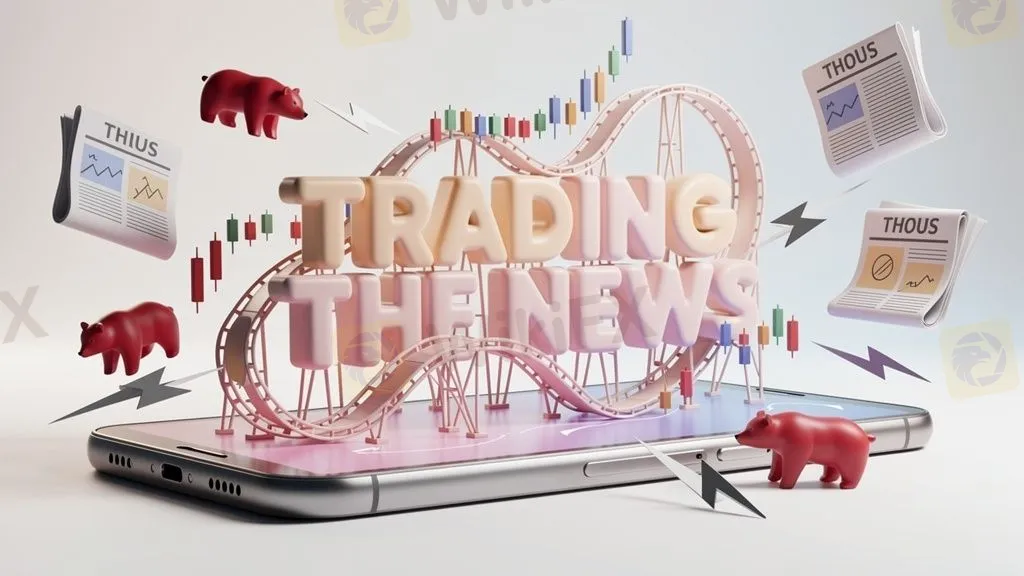
You wake up, grab your coffee, and check your phone.
“Breaking: Inflation drops lower than expected.”
Your brain screams BUY. Lower inflation means a weaker dollar and stronger stocks, right? You rush to open a long position on the S&P 500 or Gold. You feel smart. You feel ahead of the curve.
Five minutes later, the chart tanks. Youre in the red. You panic and close the trade.
What just happened? The news was “good,” so why did the market go down?
Welcome to the meat grinder. If you are a novice trader trying to trade based on breaking news headlines, you aren't investing. You are gambling against algorithms that are faster, smarter, and richer than you.
Lets talk about why trading the news is the fastest way to blow up your account, and what you should do instead.
Short answer? Rarely.
Here is the brutal truth: by the time you read a headline on Twitter, Bloomberg, or your broker's app, you are already too late.
Institutional banks and hedge funds use High-Frequency Trading (HFT) algorithms. These bots are connected directly to data centers. They read the data releases in milliseconds—literally faster than the blink of an eye—and execute thousands of trades before the webpage on your phone even finishes loading.
When you see the price spike after a news event, that is the algorithms buying. When you finally hit “Buy,” you are buying at the top. Who are you buying from? The institutions who are taking profit and exiting their positions.
You become what we call “exit liquidity.” You are holding the bag because you thought you were reacting to news, but you were actually reacting to history.
There is an old saying on Wall Street that confuses every beginner: “Buy the rumor, sell the news.”
Markets look forward, not backward. If everyone expects the Federal Reserve to cut interest rates, big traders place their bets weeks in advance. The price of Gold or EURUSD climbs steadily before the announcement.
When the announcement finally happens and the rate cut is confirmed, there are no more buyers left. Everyone who wanted to buy has already bought.
So, what happens? They sell to lock in profits.
If you wait for the news to confirm your bias, you are entering the market exactly when the smart money is leaving. This is why you see assets crash on “good news” or rally on “bad news.” It‘s not manipulation; it’s market mechanics.
Let's say you ignore my advice. You want to trade the Non-Farm Payrolls (NFP) or a CPI release.
During these events, the market goes crazy. Liquidity dries up. This leads to slippage. You might click “Buy” at 1.0500, but because the market is moving so fast, your broker fills you at 1.0520. You are instantly losing money before the trade even settles.
This is also prime time for shady brokers to play games. They know volatility is high, so they widen their spreads to ridiculous levels. Stop-losses get triggered not by price action, but by the massive gap between the bid and ask price.
This is why knowing who you are trading with is non-negotiable. Before you try to brave these volatile waters, check your brokers regulatory status on WikiFX. You need to know if your broker has a history of high slippage complaints or withdrawal issues during high-impact news. If WikiFX flags them as unregulated or low-score, stay far away. You simply cannot afford broker risk on top of market risk.
As a mentor, I don't tell you to ignore the news completely. You need to know the schedule, but you shouldn't trade the headline.
Here is the Coach K playbook for news days:
Every Sunday, look at the economic calendar for the week. Identify the “Red Folder” or high-impact events (Interest Rate decisions, CPI, Unemployment). Mark these times on your charts.
Never have an open position 15 minutes before a major event, and do not open a new one until 15 minutes after. Let the algorithms fight it out. Let the initial spike and crash happen. Once the dust settles, the real trend will reveal itself.
Don't guess what the Federal Reserve chairman will say. Wait until he finishes speaking. Look at the chart. Did price break a key support level? Did it reject a resistance level? Trade the price structure, not the words coming out of his mouth.
News creates volatility. As a trader, you want volatility because that is where the profit is. But you want to ride the wave, not stand in front of it.
Stop trying to beat the bots. Be patient, let the news hit, verify your broker is safe on WikiFX, and then trade the chart setup that follows. That is how you survive this game.
Disclaimer: This article is for informational purposes only and does not constitute financial advice. Trading involves significant risk, and you can lose your entire investment. Always do your own research.
Disclaimer:
The views in this article only represent the author's personal views, and do not constitute investment advice on this platform. This platform does not guarantee the accuracy, completeness and timeliness of the information in the article, and will not be liable for any loss caused by the use of or reliance on the information in the article.
A demo account teaches you the mechanics. A live account teaches you the psychology. You need to master both to survive in this game.

Real trading isn't about predicting the next candle. It's about predicting how you will react when the candles turn red.
Stop trying to trade logic. Trade the chart. The market can remain irrational longer than you can remain solvent, especially when “bad” news hits the wire.
Protecting your downside is 10 times more important than catching the next moonshot. When the losses pile up, shrink your risk. Be defensive. Live to fight another day.
 WikiFX WikiFX WikiFX WikiFX WikiFX WikiFX WikiFX WikiFX WikiFX WikiFX
