Abstract:Stop trying to trade logic. Trade the chart. The market can remain irrational longer than you can remain solvent, especially when “bad” news hits the wire.
You wake up, check your phone, and see the headline: “Unemployment at record highs” or “Inflation worse than expected.”
Your instinct kicks in. This is bad. This is terrible for the economy. So, you open your trading app and short the S&P 500 or sell your crypto. It makes logical sense. Bad news = prices go down, right?
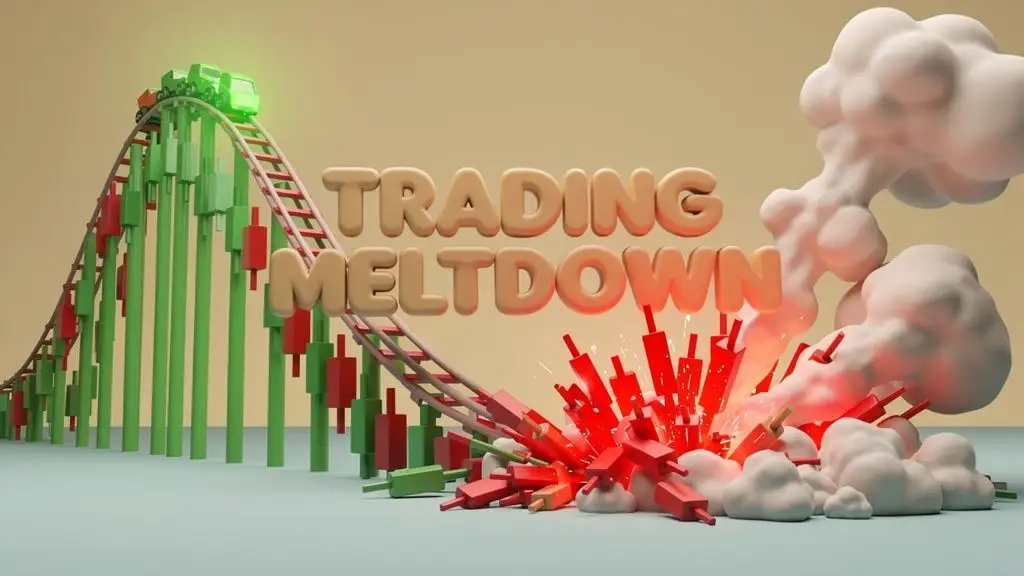
Five minutes later, you‘re staring at a massive green candle. The market is rallying. Your stop-loss gets hit, and you’re down money while the analysts on TV are celebrating.
This is the most frustrating lesson for every new trader. Ive seen thousands of students blow their accounts trying to trade the headlines. They treat the market like the real world.
But here is the cold truth: The market is not the economy. And often, the worse the news is for “Main Street,” the better it is for “Wall Street.”
Lets break down why this happens so you stop getting trapped on the wrong side of the trade.
Its All About Expectations, Not Reality
The market is a forward-looking machine. It doesn't care about what happened yesterday; it cares about what happens six months from now.
Most of the time, “bad news” has already been priced in.
Think about it like a school exam. Imagine the smartest kid in class expects to get a 100% score (A+). If he gets a 90% (A-), hes disappointed. The mood drops.
Now, imagine the class slacker. Everyone expects him to fail completely (0%). If he gets a 50% (F), technically he still failed. Thats “bad news.” But because everyone expected a 0%, a 50% is actually a huge surprise. The crowd cheers.
The stock market works the same way.
If traders expect a company to lose $1 billion, and they only lose $500 million, the stock will rally. The news is objectively “bad” (they lost money), but it was better than feared.
Why Does the Stock Market Rise on Bad Economics?
Youll often see this with big economic data drops like the NFP (Non-Farm Payrolls) or CPI (Inflation data).
When the economy looks weak—people are losing jobs, spending is down—traders start betting on the Central Banks (like the Fed).
If the economy is crashing, the Fed might step in to save the day by cutting interest rates or printing money.
- Lower rates = Cheaper money for businesses.
- Money printing = Assets go up in dollar value.
So, when you see a terrible jobs report, the algorithms aren't seeing “people out of work.” They are seeing “The Fed is going to cut rates soon, buy everything!”
Bad news for the economy becomes good news for liquidity. It‘s twisted, but that’s the game we are playing.
Sell the Rumor, Buy the News
There is an old saying on the trading floor: “Buy the rumor, sell the news.” But in a bear market, it often flips to “Short the rumor, cover on the news.”
Smart money (institutions, hedge funds) positions themselves days or weeks before the news comes out. By the time you see the headline on Bloomberg or Twitter, the move is effectively over.
If the market has been dropping for a week straight because everyone is scared of a war breaking out, the moment the war actually starts, the market might rally. Why? Because the uncertainty is gone. The event has happened. Now traders take their profits from their short positions, which means they have to BUY back the stock.
That buying pressure causes a rally, ripping the faces off retail traders who just entered short positions.
Don't Let Chaos Cost You
Trading during these high-impact news events is dangerous. Volatility spikes, candles whip back and forth, and liquidity can dry up.
This environment is also a playground for bad brokers. When the market moves fast, some brokers will widen their spreads to unfair levels or create “slippage” where your order gets filled at a much worse price than you clicked.
I always tell my students: You cannot control the market, but you can control who holds your money.
Before you try to trade high-volatility events, check your broker on WikiFX. You need to know if they have a history of rigorous regulation or if complaints pile up every time the market gets wild. If your broker plays games with your execution during news events, it doesn't matter if your analysis is right—you still lose.
Use WikiFX as your shield. Verify their regulatory status and look at the “Field Survey” data. Don't trade in a shark tank with a leaky boat.
The Action Plan
So, what should you do the next time you see a scary headline?
- Pause. Do not instant-sell.
- Check the Trend. Is the market already oversold? Has it been dropping for three days anticipating this news? If yes, a bounce is likely.
- Watch the Reaction. Ignore the number. Watch the price action. If bad news hits and the price doesn't drop, that is a massive bullish signal. It means there are no sellers left.
Stop trying to trade logic. Trade the chart. The market can remain irrational longer than you can remain solvent, especially when “bad” news hits the wire.
Stay liquid, stay safe.
Coach K
Disclaimer: This article is for educational purposes only and does not constitute financial advice. Trading involves significant risk. Always do your own research.