Ringgit hits five-year high against US dollar in holiday trade
The Malaysian ringgit extended its rally, reaching a five-year high against the US dollar, trading in a narrow range of RM4.04-RM4.05.
Industry

简体中文
繁體中文
English
Pусский
日本語
ภาษาไทย
Tiếng Việt
Bahasa Indonesia
Español
हिन्दी
Filippiiniläinen
Français
Deutsch
Português
Türkçe
한국어
العربية

Abstract:Currencies with higher liquidity typically mean lower transaction costs and greater profit opportunities. This article will explore how liquidity influences profit potential and provide insights on how to capitalize on these opportunities in trading.

In the forex market, “major currencies” such as the US dollar, euro, Japanese yen, British pound, Australian dollar, and Swiss franc dominate global trade. The US dollar is the most frequently traded currency, while the euro is second. Other currencies like the yen, pound, Australian dollar, and Swiss franc also play significant roles in global trade.
Liquidity refers to how easily an asset can be bought or sold without affecting its price. Higher liquidity means transactions can be executed at prices close to the market price. Currencies with high liquidity tend to have large trading volumes, narrower spreads, and lower transaction costs. In contrast, currencies with lower liquidity can have larger spreads and higher costs, with more volatility.
High-liquidity currencies react quickly to market changes, allowing traders to seize opportunities more easily. For example, pairs like EUR/USD and USD/JPY are more stable, offering more chances for profit.
However, high liquidity doesnt eliminate risk. Any currency can experience significant price swings due to market events or sentiment changes. Traders must use technical analysis and risk management strategies to mitigate potential losses.
To trade high-liquidity currencies, choose pairs like EUR/USD, USD/JPY, or GBP/USD for lower costs and easier market entry. Short-term traders often use intraday strategies, while long-term investors might follow larger trends.
High-liquidity pairs also have smaller spreads, making it easier to gain smaller profits with less risk. Proper money management and stop-loss strategies are essential for success. By understanding volatility, staying updated on macroeconomic data, and adjusting strategies, traders can better leverage high-liquidity currencies for profit.

Disclaimer:
The views in this article only represent the author's personal views, and do not constitute investment advice on this platform. This platform does not guarantee the accuracy, completeness and timeliness of the information in the article, and will not be liable for any loss caused by the use of or reliance on the information in the article.
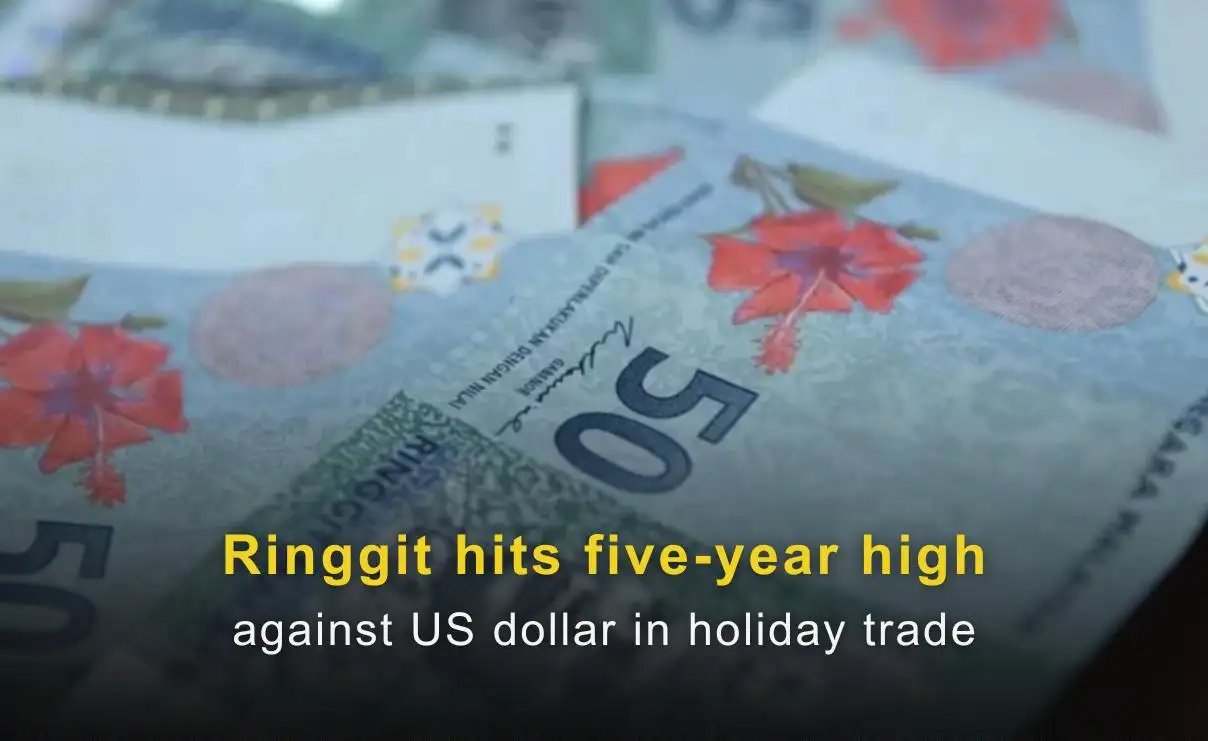
The Malaysian ringgit extended its rally, reaching a five-year high against the US dollar, trading in a narrow range of RM4.04-RM4.05.

WikiFX has launched the “Inside the Elite” Interview Series, featuring outstanding members of the newly formed Elite Committee. During the committee’s first offline gathering in Dubai, we conducted exclusive interviews and gained deeper insights into regional market dynamics and industry developments. Through this series, WikiFX aims to highlight the voices of professionals who are shaping the future of forex trading — from education and compliance to risk control, technology, and trader empowerment.

As WikiEXPO Dubai concludes successfully, we had the pleasure of interviewing Robert Hahm, the Founder and CEO of Algorada. Robert Hahm is a seasoned financial executive who has successfully transitioned from managing traditional assets to founding a cutting-edge fintech platform. As the Founder and CEO of Algorada, he leverages decades of experience in portfolio management to bridge the gap between financial domain knowledge and the power of AI.

The U.S. National Futures Association (NFA) has filed charges against Forex Wizard, a Japan-based forex trading operation, and its principal Mitsuaki Kataoka, accusing them of failing to process customer withdrawal requests promptly.
 WikiFX WikiFX WikiFX WikiFX WikiFX WikiFX WikiFX WikiFX WikiFX WikiFX
