Abstract:As WikiEXPO Dubai concludes successfully, we had the pleasure of interviewing Robert Hahm, the Founder and CEO of Algorada. Robert Hahm is a seasoned financial executive who has successfully transitioned from managing traditional assets to founding a cutting-edge fintech platform. As the Founder and CEO of Algorada, he leverages decades of experience in portfolio management to bridge the gap between financial domain knowledge and the power of AI.
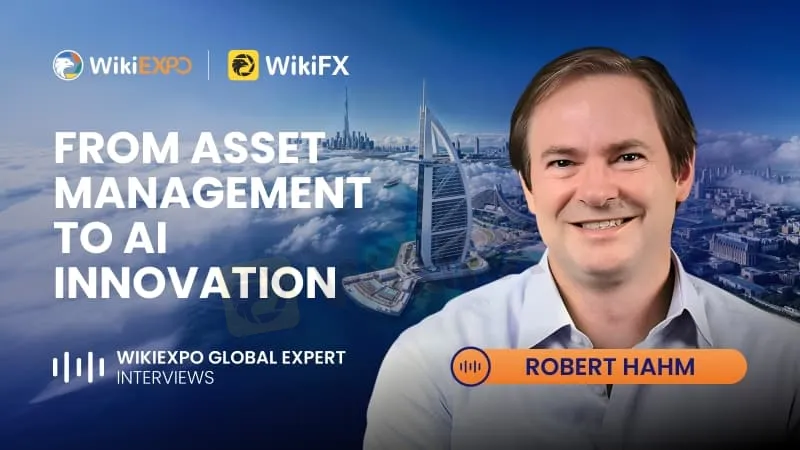
As WikiEXPO Dubai concludes successfully, we had the pleasure of interviewing Robert Hahm, the Founder and CEO of Algorada. Robert Hahm is a seasoned financial executive who has successfully transitioned from managing traditional assets to founding a cutting-edge fintech platform. As the Founder and CEO of Algorada, he leverages decades of experience in portfolio management to bridge the gap between financial domain knowledge and the power of AI.
His career journey includes a 13-year tenure at Mashreq Capital (DIFC), where as CEO and Head of Asset Management, he guided the firm to recognition among Forbes Middle Easts Top 30 Asset Managers. Robert began his professional life in emerging market debt and market risk, and later co-founded a brokerage startup, building a diverse skill set from the ground up.
As a CFA charterholder since 2009 with an MSc in Economics, he now applies his extensive expertise to lead Algoradas efforts to automate research and enable data-driven analytics that were once impossible.
Part 1: AI, Portfolio Management, and the Evolution of Investment Strategy
Q1:Your career spans traditional asset management to cutting-edge fintech. What inspired you to establish Algorada, and how does it redefine portfolio management in the age of AI?
A: My career has always sat at the intersection of rigorous financial discipline and emerging technology. After running one of the regions top asset management businesses, I saw firsthand how much time analysts and portfolio managers still spend gathering, cleaning, and structuring information - rather than actually thinking, deciding and generating alpha.
That gap inspired me to build Algorada, a platform designed to automate the slowest friction points in investment research: ingesting documents, analyzing complex data sets, comparing sources and producing structured insights.
Instead of replacing human judgement, Algorada built a framework around itallowing portfolio managers to focus on interpretation, conviction and risk-taking while automation handles the repetitive layers beneath.
In that sense, Algorada isn‘t just another research tool; it’s a new operating system for portfolio management - one that uses AI to compress hours of work into seconds and elevate the quality and consistency of decisions.
Q2: Having managed one of Forbes Middle Easts Top 30 Asset Managers, what do you see as the key factors that distinguish successful asset managers in emerging markets today?
A: Three factors increasingly differentiate winners from the rest in emerging markets:
- Information Speed & InterpretationMarkets move quickly and the information environment is often fragmented. The best managers now combine deep macro understanding with technology that helps them process data faster and more holistically.
- Discipline & RepeatabilityEmerging markets reward disciplined frameworks - whether in risk management, liquidity rules or credit processes. The firms that outperform tend to institutionalize decision-making so it remains consistent even in volatile conditions.
- Local Intelligence with Global ContextSuccess comes from matching local insights - political, regulatory, corporate - with global capital-flow dynamics. The most effective managers act as translators between these worlds.
Q3:How do you foresee the balance between human expertise and AI automation evolving in financial decision-making over the next decade?
A: Were heading toward a hybrid model where AI handles the workflow and humans handle the judgment.
AI will increasingly automate:
- document analysis and data extraction,
- comparison of sources,
- scenario and sensitivity modelling,
- sentiment and thematic tracking,
- initial drafting of research outputs.
But human expertise will remain irreplaceable for:
- contextual understanding,
- forward-looking reasoning,
- risk-taking,
- interpreting nuance and incentives,
- making final investment decisions.
In the next decade, investment teams will become smaller but significantly more capable, with every individual augmented by an intelligent research layer that accelerates their thinking.
Part 2: Technology, Transparency, and the Role of WikiEXPO
Q1: WikiEXPO brings together experts from across the world to discuss innovation and transparency. From your perspective, what role should events like WikiEXPO play in bridging technology and finance?
A: Events like WikiEXPO play a critical role in shaping how technology is actually adopted in financial markets. They provide a neutral venue where regulators, innovators, investors and practitioners can openly discuss both the opportunities and the friction points.
The value isn't just in showcasing new tools - its in creating a common language between technologists and financial professionals. When that dialogue is structured well, it speeds up innovation while maintaining the guardrails needed for trust and investor protection.
Q2: As a long-term industry leader, what are your impressions of WikiFXs efforts in promoting transparency and investor protection in global forex markets?
A: Forex markets thrive on liquidity, but liquidity is impossible without trust. WikiFXs efforts to make broker information more transparent, standardized, and accessible help reduce asymmetry - especially for retail investors.
While no platform can replace regulatory oversight, initiatives that bring data into the open and highlight risks contribute meaningfully to a healthier ecosystem. Transparency is not just a feature, it's a foundation for market integrity and efforts like these help reinforce it.
Q3: What advice would you offer to young fintech entrepreneurs entering the AI-driven investment space today?
A: Three pieces of advice:
1.Solve real pain, not theoretical problems.Talk to analysts, traders and risk managers. The biggest opportunities are still in the “boring” parts of the workflow that nobody has solved well.
2.Build with explainability and compliance from day one.In finance, trust is currency. Systems that can justify their outputs will always win over black-box automation.
3.Dont aim to replace investors - aim to augment them.The winning fintech products will be the ones that expand human capability, not compete with it.
If you focus on building tools that deliver clarity, speed and confidence, youll have something with the potential to transform the industry.
About WikiEXPO Global Expert Interview
As the organizer of WikiEXPO, WikiGlobal is committed to fostering international dialogue and cooperation through offline exhibitions. By engaging with global experts on financial regulation, technology, and governance, WikiGlobal aims to enhance the integration of fintech and regtech, improve regulatory efficiency and accuracy, and promote industry self-discipline. Through these efforts, we encourage financial institutions to adopt best practices, build a more transparent and resilient ecosystem, and ultimately create a safer trading environment for investors worldwide.