Why Do You Always Lose When Trading?
With the year ending and 2026 just around the corner, here comes the golden question: are you profitable this year? If not, this article is a must-read!
Original

简体中文
繁體中文
English
Pусский
日本語
ภาษาไทย
Tiếng Việt
Bahasa Indonesia
Español
हिन्दी
Filippiiniläinen
Français
Deutsch
Português
Türkçe
한국어
العربية

Abstract:Market Profile is a powerful trading tool that clearly shows where market activity concentrates—enhancing your trade decisions and timing.
Market Profile is a charting method used by traders to understand how the market perceives value at different price levels. Unlike traditional charts, which mainly track price changes over time, Market Profile charts clearly display how much trading activity (volume or time spent) occurs at each price level.
This method helps traders visualize important price zones, indicating where buyers and sellers most actively agree upon a fair price. By knowing these levels, traders can better judge future market movements.
When using Market Profile, there are a few essential terms that traders must grasp clearly:
Value Area (VA):
This represents the price range within which approximately 70% of the days trading activity occurs. Traders see this range as the “fair” area where most market participants agree on price value.
Value Area High (VAH) and Value Area Low (VAL):
These are the upper and lower boundaries of the Value Area, respectively. Prices at these levels often act as strong resistance (VAH) or support (VAL), guiding traders on potential trade entries or exits.
Point of Control (POC):
The POC is the price at which the market spent the most time trading or had the highest volume during the session. The market frequently returns to this price level, making it critical for analysis.
Understanding these concepts allows traders to recognize market conditions clearly and identify strong price levels for potential trades.
Unlike candlestick charts, Market Profile charts visually organize price levels vertically. At each price, letters or blocks indicate periods of trading activity. The more letters or blocks at a certain price, the longer the market stayed or traded at that level, highlighting its importance.
For example, a simple Market Profile shape might resemble a bell curve, indicating that most trading activity was concentrated around a central price (POC). A “thin” area with fewer blocks means the market quickly rejected those price levels, showing less acceptance.
By examining these charts, traders quickly identify price levels of high acceptance (value areas) and low acceptance (rejected prices).
Lets consider some practical ways to use Market Profile effectively:
When Market Profile forms a symmetrical “D-shape,” this indicates a balanced market. Neither buyers nor sellers dominate, so price moves within a well-defined range.
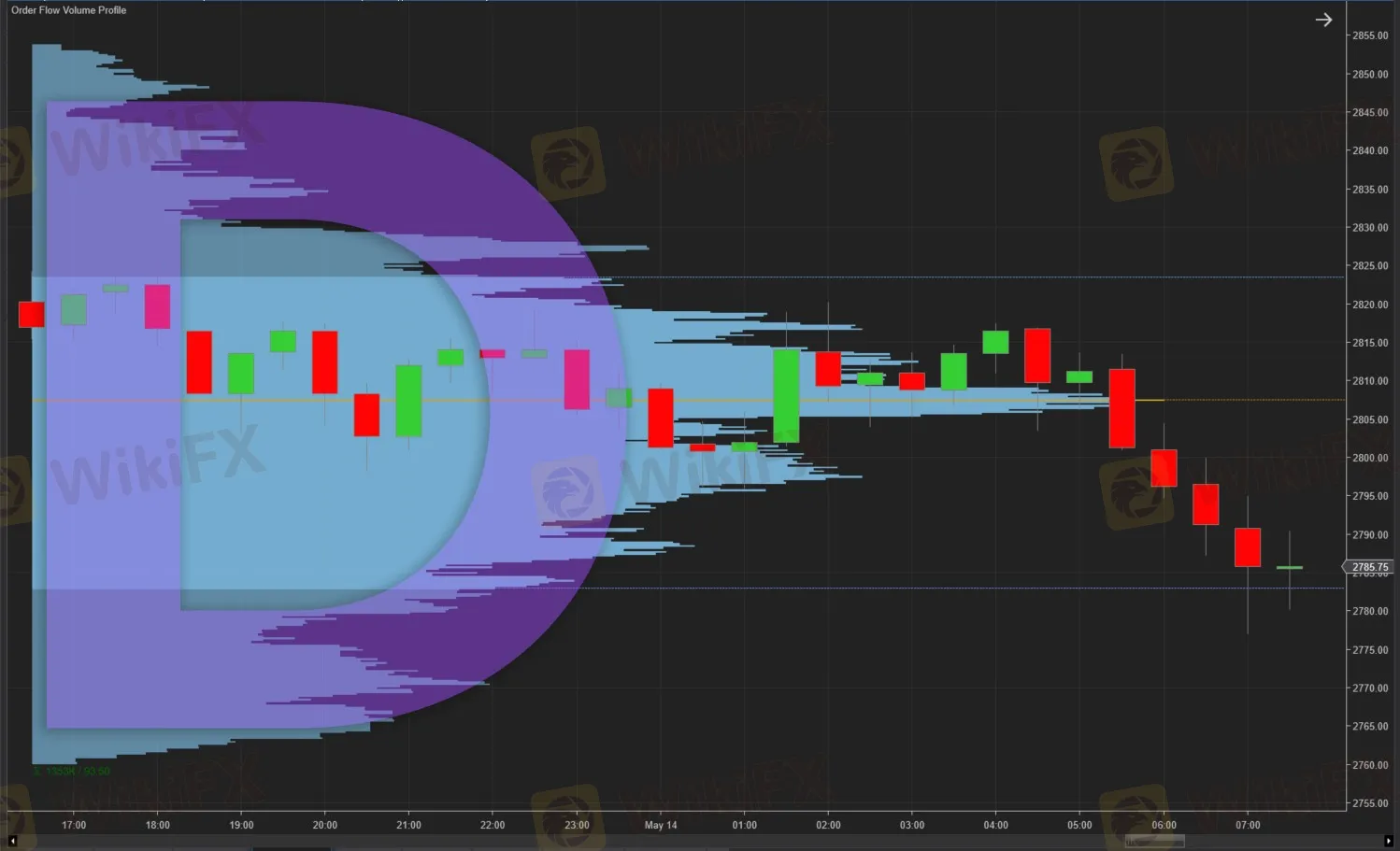
Traders typically approach such conditions by selling near the Value Area High and buying near the Value Area Low. Because the market sees these extremes as unfair prices, it naturally tends to revert toward the Point of Control.
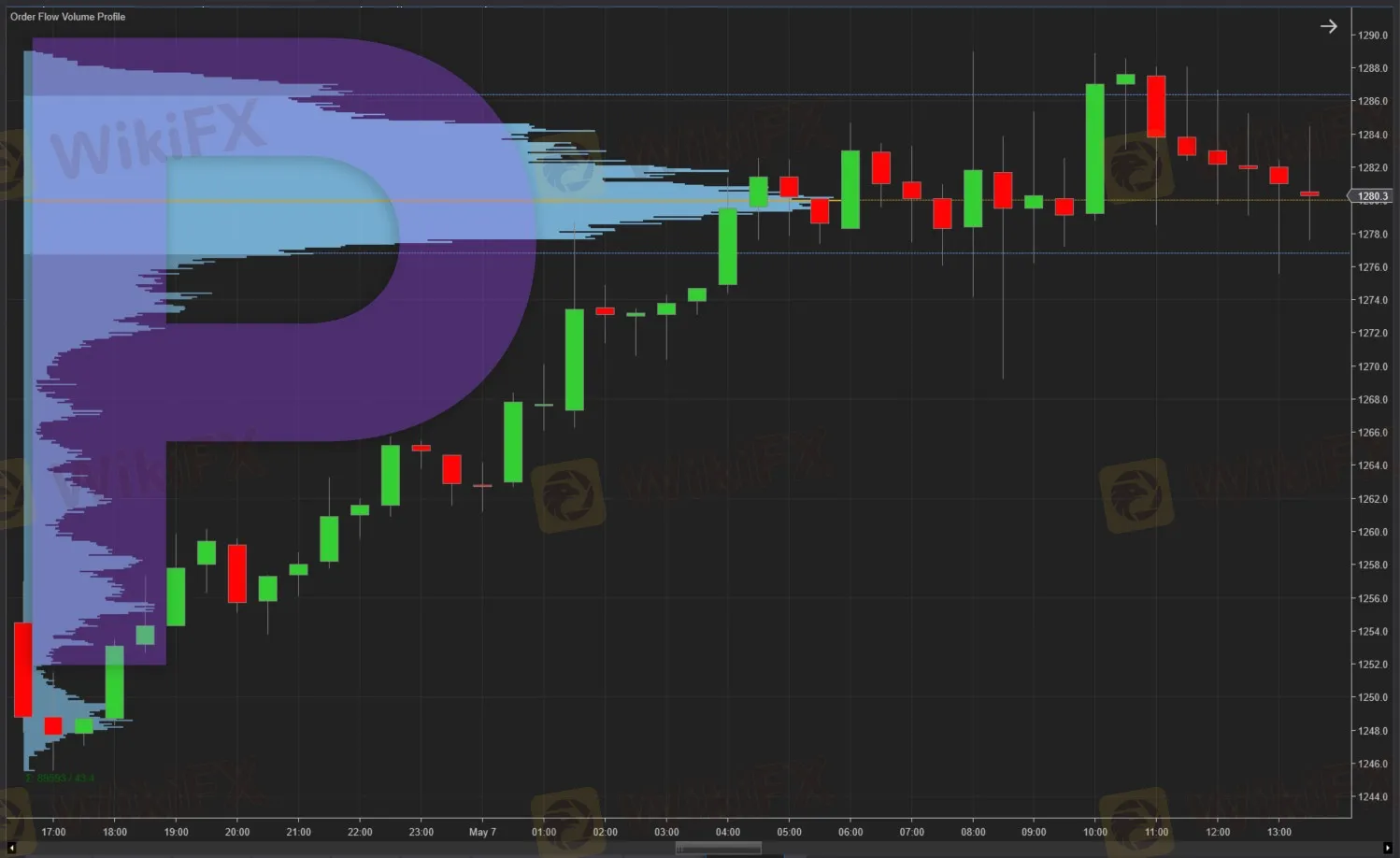
When you see a “P-shaped” profile, the market spent a short time at lower prices but stabilized at higher levels, indicating bullish strength. Traders usually look for opportunities to buy on small pullbacks toward the upper Value Area.
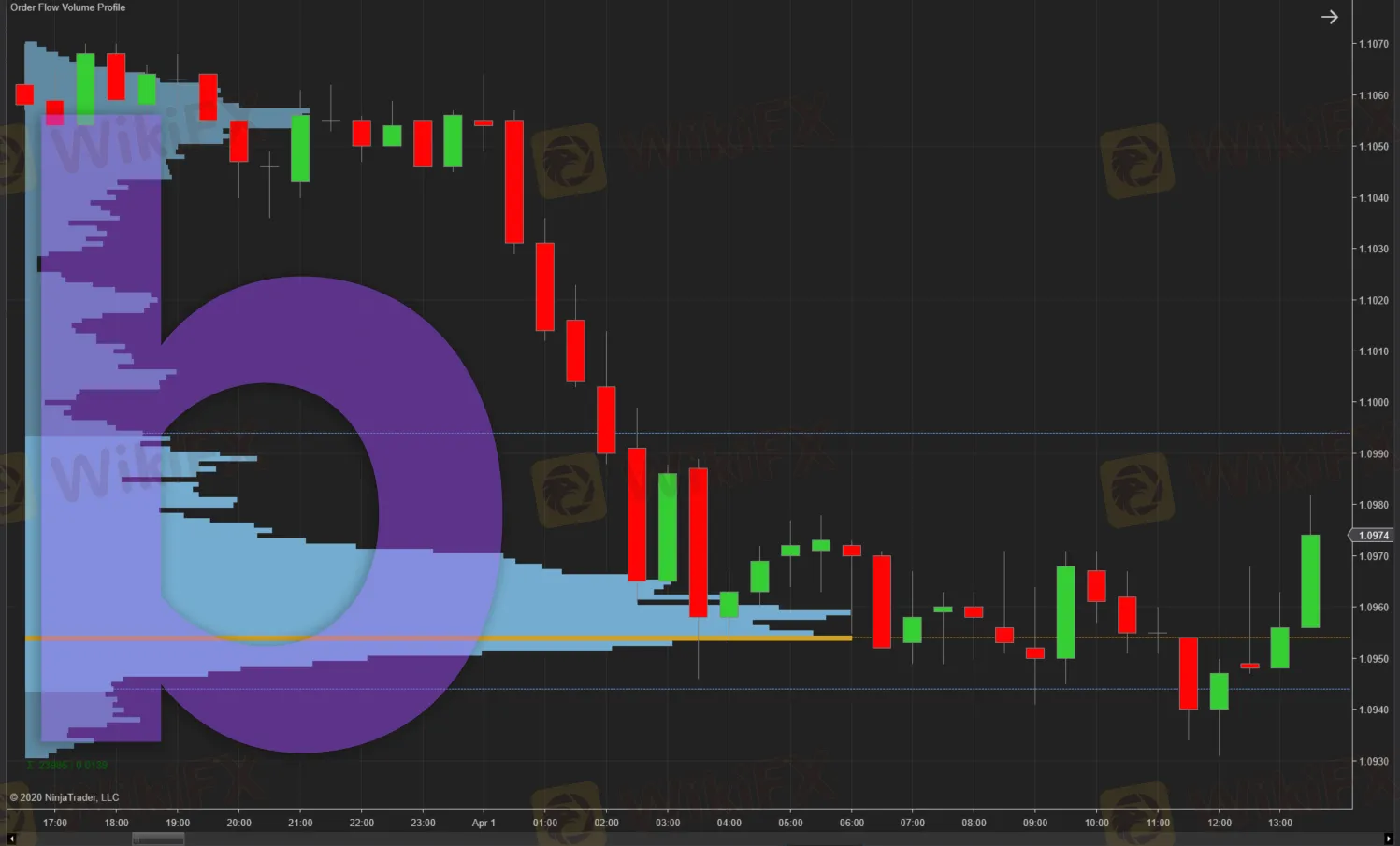
Conversely, a “b-shaped” profile reflects a bearish market, where prices stabilize after sharp declines. In this case, traders might seek short opportunities near the upper boundary of the value area during temporary rebounds.
On some trading days, the Market Profile might show two distinct areas of significant trading activity separated by a region of low trading volume. Traders call this a “double distribution day.”
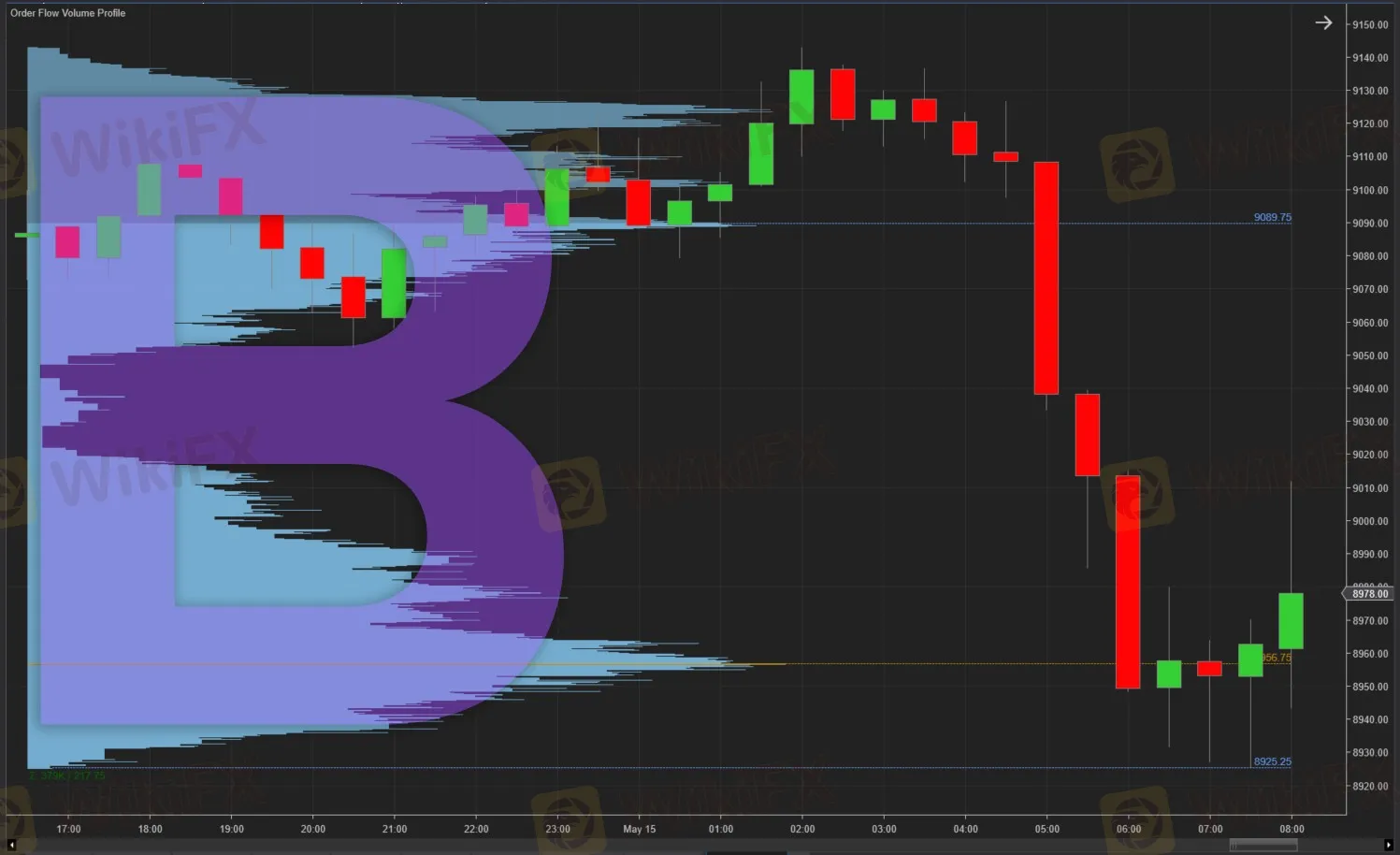
The area of low trading activity acts like a barrier. If price moves into this low-volume area again, traders expect a swift price move to the next area of high volume. These scenarios often provide clear breakout trading opportunities.
Heres a realistic scenario to illustrate practical use:
Suppose yesterdays Market Profile shows a clear value area between 1.1050 (VAL) and 1.1100 (VAH), with the Point of Control at 1.1075.
If today‘s price moves above yesterday’s VAH (1.1100), observe carefully:
By tracking these levels, traders can better anticipate market behavior and manage their positions effectively.
No. Although day traders widely use it, Market Profile is equally beneficial for swing traders and long-term investors to identify key price zones and market sentiment over larger timeframes.
Market Profile can be applied to nearly any liquid market: stocks, futures, forex, commodities, and even cryptocurrencies. The key requirement is sufficient trading activity to generate meaningful profiles.
Many popular trading platforms, such as TradingView, NinjaTrader, and Sierra Chart, provide Market Profile indicators. Traders can start by using demo accounts to familiarize themselves with reading and interpreting these charts before committing real capital.
Market Profile does not directly predict future prices. Instead, it provides a clear visualization of current market sentiment and price acceptance levels. This insight helps traders understand likely future behaviors based on past and current trading patterns.
In summary, Market Profile is a powerful analytical tool that clearly shows where the market sees fair value and where it doesnt. It helps traders identify key price levels, improving their timing for trade entries and exits and enhancing overall risk management.
While Market Profile does not replace traditional technical analysis methods, it complements them by offering a deeper, clearer view of market behavior. With practice, any trader—novice or experienced—can integrate Market Profile into their trading strategy to make more informed, confident decisions.
Disclaimer:
The views in this article only represent the author's personal views, and do not constitute investment advice on this platform. This platform does not guarantee the accuracy, completeness and timeliness of the information in the article, and will not be liable for any loss caused by the use of or reliance on the information in the article.

With the year ending and 2026 just around the corner, here comes the golden question: are you profitable this year? If not, this article is a must-read!

This article gives you a complete, fair look at ZarVista (now called Zarvista Capital Markets as of September 2024). We'll examine what users say, check the company's legal status, and investigate the biggest problems users report. Our goal is to give you clear, factual information so you can make a smart decision based on evidence, not just marketing promises. We'll look at both the good services they offer and the serious issues you need to think about carefully.

For traders asking, "Is ZarVista legit?", the evidence points to a clear and strong conclusion: ZarVista operates as a high-risk broker. While it shows a modern interface and different account types, these features are overshadowed by major weaknesses in how it is regulated, a history of legal problems, and many user complaints. This article will break down these issues to give you a complete view of the risks involved. Our analysis shows that the chance of losing capital when dealing with ZarVista is very high. The combination of weak overseas licensing and documented problems creates a situation where trader funds are not properly protected.

ZarVista changed its name from ZaraFX in September 2024. It claims to be a worldwide broker offering various services. It offers the popular MetaTrader 5 (MT5) platform, high leverage of up to 1:500, and various account types tailored to different traders. However, when we look closer, we find many serious risks that anyone thinking about using it should know about. The main problem is how it's regulated - it operates in offshore locations that don't watch financial companies very closely. This gets worse when you add the many user complaints about problems getting their money out, plus a serious legal investigation by Indian authorities in 2025. This review will break down these problems and give you a clear picture of this broker. You need to do careful research, and we suggest you check any broker's current regulatory status and user reviews yourself. A tool like WikiFX can give you current information and important risk warnings.
 WikiFX WikiFX WikiFX WikiFX WikiFX WikiFX WikiFX WikiFX WikiFX WikiFX
