FINRA Fines Mundial Financial $100K for Violations
FINRA fines Mundial Financial Group $100K for compliance failures, AML violations, and unregistered principal activity.
Original

简体中文
繁體中文
English
Pусский
日本語
ภาษาไทย
Tiếng Việt
Bahasa Indonesia
Español
हिन्दी
Filippiiniläinen
Français
Deutsch
Português
Türkçe
한국어
العربية

Abstract:IMF alerts Japan to rising foreign market volatility, BOJ rate hikes, and liquidity risks. Learn how these factors could impact Japan's economy.
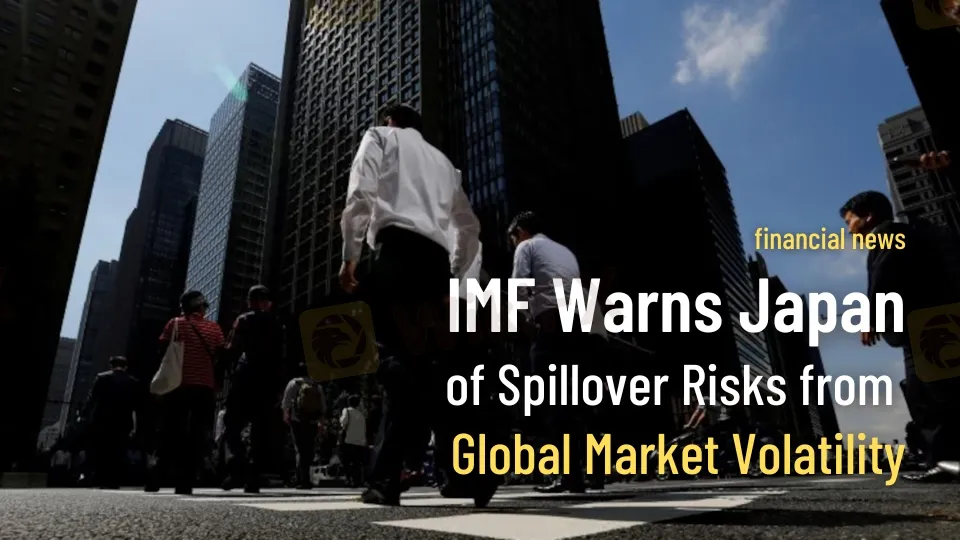
The International Monetary Fund (IMF) has called on Japan to stay alert to the potential ripple effects of growing foreign market volatility, which could strain liquidity for its financial institutions. In a statement released on Friday, the IMF stressed the importance of Japan keeping a close eye on the consequences of the Bank of Japan's (BOJ) recent interest rate increases. These include higher costs for managing the countrys public debt and the possibility of more businesses going bankrupt.
“As interest rates climb, the cost of handling Japan‘s substantial public debt is projected to double by 2030, making a strong debt management strategy essential,” the IMF noted. The organization pointed out that Japan’s government bond issuance will depend more heavily on foreign investors and domestic institutions, particularly as the BOJ reduces its balance sheet and the need for financing grows.
The yen has been on a rollercoaster against the dollar, largely due to changes in the interest rate gap between Japan and the U.S., as well as the actions of yen carry traders. These factors, along with increasing global market instability, could worsen domestic liquidity issues, the IMF warned. To address these risks, the central bank should keep a close watch on liquidity conditions and funding rates in money markets, with special attention to how unevenly liquidity is distributed among banks.

The IMF commended Japan for its “continued commitment to a flexible exchange rate system,” saying it helps the country cushion external shocks and maintain its focus on price stability. Last year, the BOJ wrapped up a decade-long aggressive stimulus program and raised short-term interest rates from 0.25% to 0.5% in January, showing confidence that Japan is on track to sustainably hit its 2% inflation goal.
After nearly 30 years of barely any inflation, Japan‘s economy is showing signs of reaching a “new equilibrium,” with inflation staying above the BOJ’s target for over two years and a tight labor market pushing wages higher. However, the IMF warned that Japans ultra-low interest rates might have kept less productive companies afloat longer than they should have, slowing down necessary economic reforms.
The IMF recommended a gradual increase in the BOJs policy rate, cautioning that quicker-than-expected rate hikes, along with a rise in bankruptcies among smaller firms, could shake the banking sector. “While slowly rising interest rates have boosted bank profits, faster increases or sudden shifts in global financial conditions could heighten market volatility,” the IMF said. A swift tightening of monetary policy could also unsettle the Japanese government bond (JGB) market, raising interest rate risks for banks with larger exposures.
FAQs:
What is the IMF's main concern for Japan's economy?
How could BOJ interest rate hikes affect Japan?
Why is the yen fluctuating against the dollar?
What is Japan's “new equilibrium” according to the IMF?
What risks do faster-than-expected rate hikes pose?
About IMF
The International Monetary Fund (IMF) is a global financial organization founded in 1944 to promote international monetary cooperation, ensure financial stability, and support sustainable economic growth. With 190 member countries, the IMF offers policy advice, financial aid, and technical expertise to help nations tackle economic challenges, stabilize their economies, and reduce poverty. Based in Washington, D.C., the IMF plays a key role in tracking global economic trends, providing crisis prevention strategies, and helping countries achieve macroeconomic stability. Its mission is to maintain the stability of the international monetary system, enabling nations to build stronger economies and improve the lives of their people.

Disclaimer:
The views in this article only represent the author's personal views, and do not constitute investment advice on this platform. This platform does not guarantee the accuracy, completeness and timeliness of the information in the article, and will not be liable for any loss caused by the use of or reliance on the information in the article.

FINRA fines Mundial Financial Group $100K for compliance failures, AML violations, and unregistered principal activity.

ASIC warns of rising pump-and-dump scams after four Australians were convicted for manipulating penny stocks via Telegram.

WikiFX has launched the “Inside the Elite” Interview Series, featuring outstanding members of the newly formed Elite Committee. During the committee’s first offline gathering in Dubai, we conducted exclusive interviews and gained deeper insights into regional market dynamics and industry developments. Through this series, WikiFX aims to highlight the voices of professionals who are shaping the future of forex trading — from education and compliance to risk control, technology, and trader empowerment.

WikiFX Golden Insight Award uniting industry forces to build a safe and healthy forex ecosystem, driving industry innovation and sustainable development, launches a new feature series — “Voices of the Golden Insight Awards Jury.” Through in-depth conversations with distinguished judges, this series explores the evolving landscape of the forex industry and the shared mission to promote innovation, ethics, and sustainability.
 WikiFX WikiFX WikiFX WikiFX WikiFX WikiFX WikiFX WikiFX WikiFX WikiFX
