Bybit to Restrict Services in Japan Amid Regulatory Pressure
Crypto exchange Bybit will limit access for Japanese users in 2025, citing compliance with strict local regulations.
Original

简体中文
繁體中文
English
Pусский
日本語
ภาษาไทย
Tiếng Việt
Bahasa Indonesia
Español
हिन्दी
Filippiiniläinen
Français
Deutsch
Português
Türkçe
한국어
العربية

Abstract:ESMA proposes stringent limitations on non-EU crypto firms serving EU clients, emphasizing 'reverse solicitation' as an exception, potentially prompting foreign companies to establish a physical presence within the EU to comply with MiCA regulations.

The European Securities and Markets Authority (ESMA) has introduced a proposal with potential implications for the operations of non-EU crypto companies within the European Union.
The proposed guidelines aim to impose stringent limitations on how these firms serve EU customers directly, intending to curb unfair competition. This initiative follows the EU's enactment of the groundbreaking Markets in Crypto-Assets (MiCA) framework last year, representing a significant stride in regulating the inherently challenging cross-border nature of the online crypto sector.
ESMA's recent proposals, currently open for public consultation until the end of April, seek to provide clarity on the practical application of MiCA, particularly for crypto asset firms located outside the EU. According to ESMA's statement, non-EU firms can only offer crypto-asset services to EU clients if the client exclusively initiates the service, known as 'reverse solicitation,' a concept present in other EU financial laws.
ESMA emphasizes that this exemption should be narrowly interpreted and viewed as an exception rather than the norm. This stance may compel many foreign crypto firms to establish a physical presence within the EU, such as opening a branch or subsidiary, to adhere to the bloc's regulations.

In a commitment to safeguard EU-based investors and MiCA-compliant crypto-asset service providers, ESMA and EU national regulators are determined to hold non-EU entities to the same standards. The proposals strictly prohibit the direct solicitation of business within the EU by non-EU firms, including marketing campaigns.
Moreover, ESMA proposes guidelines to ascertain when a crypto asset should be classified as a “financial instrument,” similar to stocks or bonds. If categorized as such, these assets would fall under the EU's Markets in Financial Instruments Directive (MiFID) rules, introducing an additional layer of regulatory oversight.

Disclaimer:
The views in this article only represent the author's personal views, and do not constitute investment advice on this platform. This platform does not guarantee the accuracy, completeness and timeliness of the information in the article, and will not be liable for any loss caused by the use of or reliance on the information in the article.
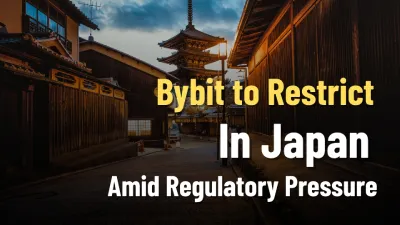
Crypto exchange Bybit will limit access for Japanese users in 2025, citing compliance with strict local regulations.

Coinbase unveils stock trading, prediction markets, and a tokenization platform as it aims to evolve beyond crypto and bridge traditional finance.

Is your MBFX withdrawal request pending even after months of raising it? Has the broker defrauded you? Does the broker keep changing spreads to pile losses for you? Have you lost due to its copy trading activities? Is the customer support service silent to your trading queries? Many traders have called out the broker for these alleged wrongdoings. In this MBFX review article, we have highlighted these trading concerns. Read on!
Uniglobe Markets claims to be an online trading company that offers many different types of investments, including foreign currency and raw materials. The company tries to attract traders by offering high leverage, different account options, and popular MetaTrader trading software. However, there is one major problem: the company does not have proper regulatory oversight. This creates serious concerns about the safety of clients’ capital and whether the company operates honestly. Read on to learn more about its regulatory status.
 WikiFX WikiFX WikiFX WikiFX WikiFX WikiFX WikiFX WikiFX WikiFX WikiFX
