Italy’s CONSOB Blocks Five Illegal Investment Sites
CONSOB orders the blocking of five unauthorized investment websites in Italy as part of its ongoing effort to curb financial fraud and protect investors.
Original

简体中文
繁體中文
English
Pусский
日本語
ภาษาไทย
Tiếng Việt
Bahasa Indonesia
Español
हिन्दी
Filippiiniläinen
Français
Deutsch
Português
Türkçe
한국어
العربية

Abstract:The solution can prove who you say you are, without exposing key information.

DeFi ecosystem startup AllianceBlock says it has come up with a solution to the problem of blockchain-based identity verification, giving users the option of undergoing KYC just once and then using their established identity across multiple services and products.
The new solution is AllianceBlock‘s Trustless Identity Verification (TIDV) application, which makes it possible for anyone to prove they are who they say they are, without revealing any details of themselves to the service they’re signing up for. This is possible because users must first undergo KYC with a third-party verification service, which then stores their anonymized identity credentials on-chain. Then, service providers can review applications and verify them without needing to see their identity data.
It‘s a solution that solves some big problems. DeFi regulation is surely just a matter of time, and it means that retail investors need a compliant solution. But at the same time, users don’t want to sacrifice their privacy with decentralized services. With AllianceBlock‘s TIDV, DeFi users have a way to prove their identities while ensuring that their private information remains secure. No service provider, including AllianceBlock or its verification partner GBG, will maintain a record of user’s personal data.
The biggest advantage of TIDV is it means users only need to go through the KYC process once. By doing so, they create a verifiable and encrypted identity that can be used across multiple DeFi applications and services. The key thing to understand is that once the KYC process has been completed, TIDV encrypts those records to ensure they can only be accessed by the services that need to. In this way, users retain full control over their data and its access permissions, and have the ability to revoke access at any time.
GBG‘s managing director Boris Huard explained that his company’s KYC service is quick to deploy and able to verify users identities in seconds, creating a secure environment that meets compliance needs without sacrificing the user experience. “We are excited to partner with AllianceBlock to provide KYC checks for TIDV to protect against the ever-more sophisticated methods of crypto-crime and work together to build trust in the digital assets industry,” he added.
AllianceBlock said TIDV is initially being integrated with its own Fundrs service, which is a crowdfunding platform that enables anyone to invest in up and coming crypto projects. This ensures that startups seeking to raise capital through Fundrs can comply with regulatory requirements. The first project to take advantage of the service will be dua Token, which is building a Web3 platform that seeks to bring together globally-fractured communities.
Later, AllianceBlock said TIDV will be integrated with its DeFi Terminal, Data Tunnel and DEX platforms, enabling its community to participate in all of its platforms in a compliant way. In addition, AllianceBlock TIDV will be made available to third-party DeFi apps and services that are interested in bolstering their compliance.
“Trustless IDentity Verification has the ability to revolutionize the way compliance is managed in DeFi and blockchain,” said AllianceBlock CEO Rachid Ajaja. “It will give users complete control over their online identities and let them connect to different integrated dApps and revoke permissions if needed.”

Disclaimer:
The views in this article only represent the author's personal views, and do not constitute investment advice on this platform. This platform does not guarantee the accuracy, completeness and timeliness of the information in the article, and will not be liable for any loss caused by the use of or reliance on the information in the article.

CONSOB orders the blocking of five unauthorized investment websites in Italy as part of its ongoing effort to curb financial fraud and protect investors.

For traders asking, "Is ZarVista legit?", the evidence points to a clear and strong conclusion: ZarVista operates as a high-risk broker. While it shows a modern interface and different account types, these features are overshadowed by major weaknesses in how it is regulated, a history of legal problems, and many user complaints. This article will break down these issues to give you a complete view of the risks involved. Our analysis shows that the chance of losing capital when dealing with ZarVista is very high. The combination of weak overseas licensing and documented problems creates a situation where trader funds are not properly protected.
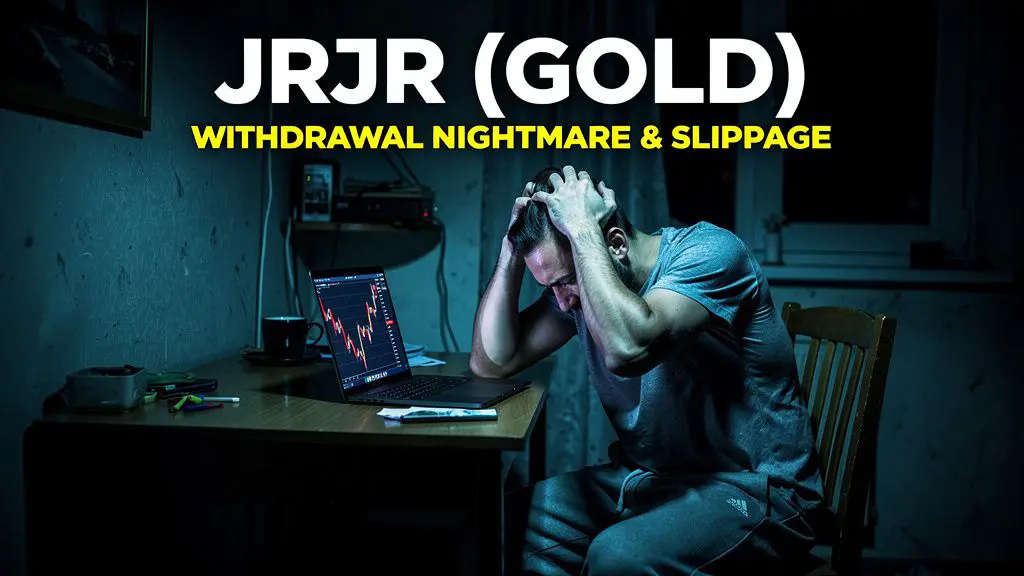
Despite holding a recognized license in Hong Kong and maintaining a seemingly high score on some metrics due to its establishment year, the broker JRJR (金荣中国) has become the subject of an alarming volume of trader complaints. In the last three months alone, WikiFX has received over 141 individual complaints. The core risk isn't just market volatility—it is a systematic pattern of behavior that suggests trading conditions may be manipulated to ensure client losses, coupled with a refusal to process withdrawals for profitable accounts.
ZarVista changed its name from ZaraFX in September 2024. It claims to be a worldwide broker offering various services. It offers the popular MetaTrader 5 (MT5) platform, high leverage of up to 1:500, and various account types tailored to different traders. However, when we look closer, we find many serious risks that anyone thinking about using it should know about. The main problem is how it's regulated - it operates in offshore locations that don't watch financial companies very closely. This gets worse when you add the many user complaints about problems getting their money out, plus a serious legal investigation by Indian authorities in 2025. This review will break down these problems and give you a clear picture of this broker. You need to do careful research, and we suggest you check any broker's current regulatory status and user reviews yourself. A tool like WikiFX can give you current information and important risk warnings.
 WikiFX WikiFX WikiFX WikiFX WikiFX WikiFX WikiFX WikiFX WikiFX WikiFX
