Abstract:On Wednesday, it happened.
After two years of patiently waiting, the Federal Reserve has officially announced the first interest rate since 2018. The interest rate increased by 25 basis points from 0.25% to 0.5%, ending the ease of monetary policy during the pandemic days to combat the fastest pace inflation in 40 years.
This spike was expected and priced in by the market. There were slight fear and concern that the funds rate could rise by 50 basis points, but that did not happen. Simultaneously, the Federal Reserve announced that they plan on hiking interest rates at each of the next six Federal Reserve meetings. This implies that by the end of 2022, interest rates could be just under 2%.
The Federal Open Market Committee (FOMC) mentioned and hinted during the press conference that they plan on starting to unwind their balance sheet in May, which will then affect the bond market. They briefly acknowledged that with higher interest rates, they are expecting slower economic growth.
The situation was intensified with Russias invasion of Ukraine which caused energy prices to spike to record highs. Adding fuel to fire, the world is currently facing ongoing supply chain issues because of sanctions imposed on Russia. In addition, China is entering into another round of lockdown due to the new spike of Coronavirus cases.
Ultimately, the biggest question is, “are we going into a recession in 2022?” Or at the very least, a stagflation scenario where inflation is high, but growth is low. Unfortunately, this remains as an unanswered question.
On the other hand, on Thursday, the Bank of England has also risen its interest rates for the third successive time since December 2021. For this time, it was another 25 basis points to 0.75%, from the 0.5% rate announced in February 2022. Similar to the Federal Reserve, the Bank of England alerts that the interest rate may rise to 8% within the year and is likely to be accompanied by a tightening monetary policy.
This is the beginning of a brand-new market cycle that is about to change everything.
At the core, this is going to have a ripple effect throughout the market, affecting home prices, stock market values, savings accounts, credit cards, and other types of loans.
One way or another, everyone is bound to be affected by this major change.
Before the Federal and Bank of Englands interest rate announcements, we released an article titled “Where Are We Prior to the Major Announcements” (https://www.wikifx.com/en/newsdetail/202203166204682243.html. In this article, let us review how did the USD and Pound react to the hikes.
The US Dollar:
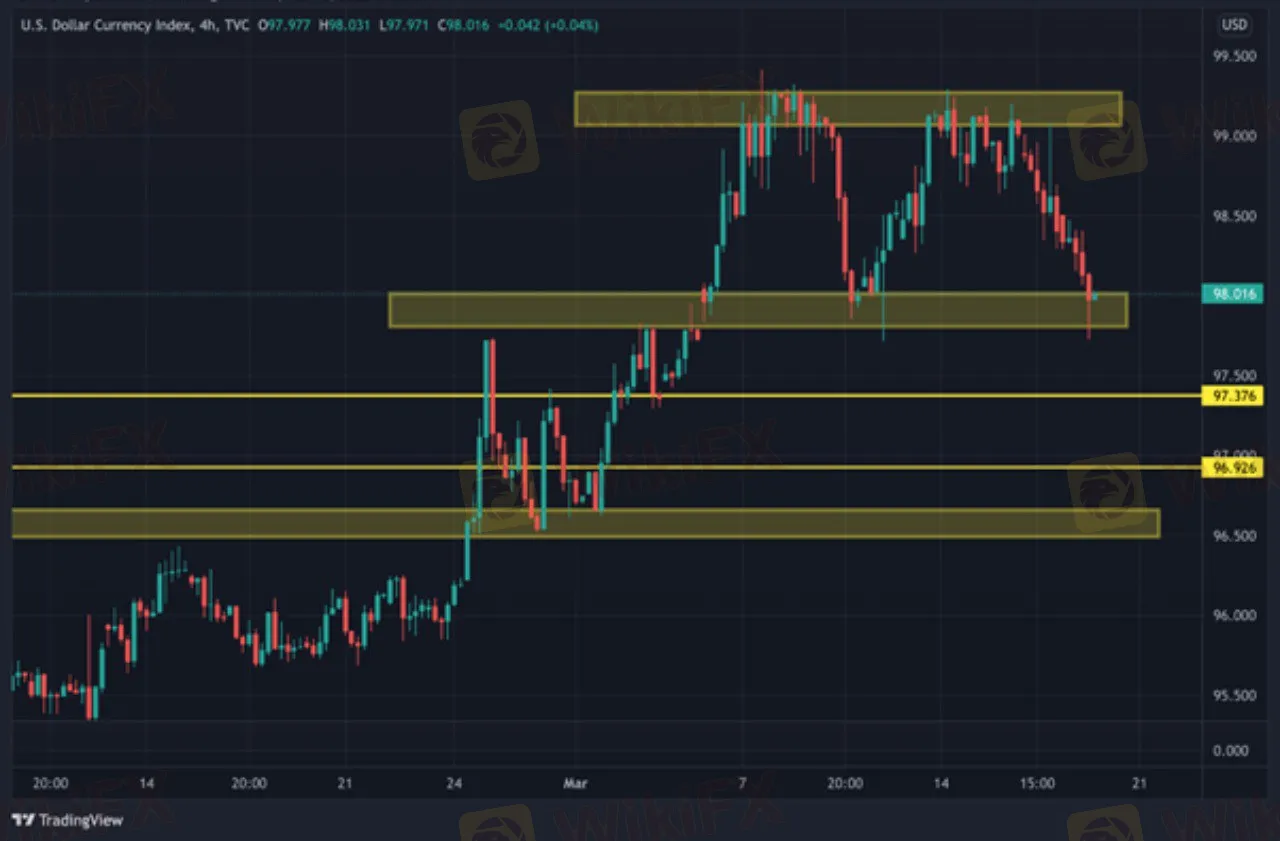
The US dollar started to show signs of weakness before the interest rate announcement. It failed to break above the 99.00-99.2000 range. On the day of the announcement, the price came up to retest 99.00 before dropping further.
For the time being, the nearest support range could be seen around 97.750-98.00. Failure to stay above it could probably send USD down to 96.500 area.
The general consensus is that as the interest rate increases, the corresponding currency should follow suit. Nevertheless, in the case of USD, it is believed that the market had already priced in the effect of this hike as we saw a dramatic rally of USD earlier this month.
GBP/USD:
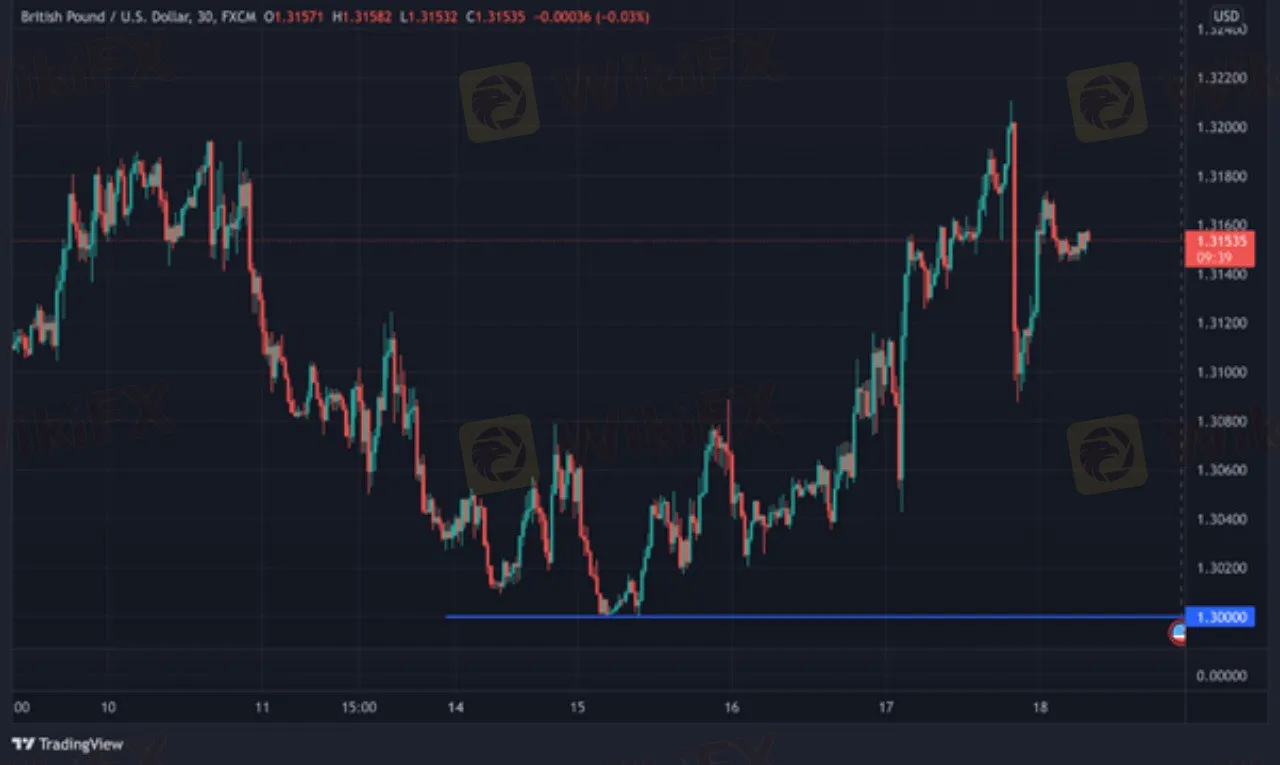
The downside was limited for GBP/USD as mentioned on Wednesday as it sat on the key support level of 1.30000, derived from both the daily and weekly charts. A round number like this could generally be a psychological support. The price bounced off 1.3000 and headed towards the 1.32000 area before having a slight retracement.
Currently, 1.32000 and 1.3000 would be levels to watch out for GBP/USD. If the price could stay about 1.32000, it is possibly going towards 1.33500 – 1.34000. On the contrary, if it stays below 1.32000, the price might return to 1.3000 in the short run.